

The conversation around data centres and the grid usually runs one way. Power demand is rising at a pace the network wasn’t built for. Grid operators are stretched. Connection queues are backed up.
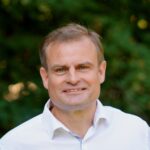
Pete Aynge, Senior Director of Data Centre Operations at GreenScale, thinks that framing is wrong — or, at least, that it doesn’t have to stay that way.
“From the very beginning, we set out to rethink how data centres are built,” he told Cititec. “Rather than being a burden, they can become an asset through stable, flexible demand, running on green energy, and helping to strengthen the grid.”
The bottleneck is real. So is the fix.
Grid constraint is not a dispute. As Aynge puts it, “the grid companies are likely struggling to cope with the size, scale, and volume of projects coming through at the moment.” Investment in grid reinforcement and new generating capacity is under way, but the operators responsible for delivering it are being asked to move faster than their procurement processes and staffing levels allow.
Nuclear is a common answer in these conversations. Aynge is measured about it. “Technically, it’s a great solution in the way it can be deployed. The real challenge will come around permitting, legislation, getting over local barriers, and convincing people that it’s safe.” With a minimum lead time of a decade and a currently unproven cost of energy, he is not counting on nuclear energy to resolve the near-term pressure.
His preferred short-term answer is co-locating data centres with renewable generation. By combining private wire connections and energy storage, data centres can make better use of renewable electricity that would otherwise be curtailed due to transmission constraints and system balancing requirements, an approach explored in greater detail in GreenScale’s recent whitepaper. This provides a stable source of demand that reduces renewable energy wastage, lowers system costs, and strengthens the electricity grid. “We can lower energy prices because the consumer is not paying for gas when wind power is switched off,” he said, “We can actually become a positive influence on the grid as a local load to operate against.”
Go where the power is
GreenScale’s site strategy follows the same logic. Rather than competing for constrained land and grid capacity in tier-one markets, the company is focusing on locations where generation is abundant and the infrastructure to support large campuses actually exists.
The leading example is GreenScale’s Tonstad Campus, in southern Norway. “We’re developing in a region with nearly a gigawatt of hydro, next to one of the most secure nodes in Norway that connects to northern Germany,” Aynge explained. That combination of resource availability, land, and grid connectivity to major demand centres is exactly what Aynge means when he talks about finding the “magic places” for hyperscale infrastructure.
You’d find it difficult to build a campus of the same scale on the outskirts of London. The land isn’t there and the power connection isn’t a good match for data centre requirements. That constraint elevates non-traditional markets to a prerequisite, particularly for AI training infrastructure where latency to the end user is a secondary concern.
There are trade-offs. The further a site sits from the demand centre, the more likely it is to require additional investment in grid infrastructure, fibre connectivity, and transport links, even if land and power are more readily available. “There’s definitely a balancing act,” Aynge acknowledged, “in finding the right areas that aren’t too far away, that have the land availability, that zone properly, and that also have access to large amounts of power.”
How AI changes the grid conversation
Traditional data centre load is predictable. It rises in summer as chillers work harder and falls back in winter. Grid operators know roughly what to expect, and they plan accordingly.
AI workloads do not behave this way. The rapid, variable demands of large-scale training and inference create load spikes that are harder to forecast. “The load profiles and how they affect the grid — that’s the key difference,” Aynge said.
This is a live conversation between operators and grid companies, not a solved problem. For GreenScale, it reinforces the case for its monitoring and control-first approach: if you understand your own load behaviour in detail, you can manage the interaction with the grid rather than simply report it after the fact.
Operating at scale means operating differently
There is an additional constraint at the heart of hyperscale operations, not yet worked out by industry leaders. When a site is 10 megawatts, you can run it with people walking the floor, checking readings, carrying maintenance on a schedule. Multiply that by 30 or 40 and that model no longer scales.
“You can’t do those tasks manually anymore,” Aynge said.
The shift described is less about automation for efficiency and more about automation as an operational necessity. The data centre of the future looks less like a managed building and more like a modern factory: systems that pull telemetry from every point in the facility, flag anomalies before they become failures, and make informed recommendations to the operators who act on them.
For Aynge, this also changes the talent brief. Reduce the mundane tasks through automation, and what’s left is a smaller set of genuinely specialist roles where expertise can be deepened and shared, rather than diluted across a roster of people running routine checks.
The dawning 20-year talent problem
If the grid discussion is urgent, the workforce discussion is structural. Aynge’s diagnosis is blunt: “There’s been a lack of investment in engineering and certainly apprenticeships for probably 20 years or so. As a result, the people we need just don’t exist.”
The shortage cuts across the sector. Data centres, renewables, and energy infrastructure of all kinds are affected. Rather than fighting over the same engineers and technicians, GreenScale is trying to bring more people into the workforce.
That starts early. GreenScale is already attending careers days in the communities where its sites are planned, specifically targeting 14-to-16-year-olds. “By the time you get to 16 or 18, it’s too late,” Aynge said. With Tonstad Campus two years from going live at the time of this conversation, the pipeline work has to happen now, particularly in a country like Norway where a full technical apprenticeship runs two years at college followed by two years on site. “We’ve got to be engaging with young people and colleges right now, saying you could have an interesting and rewarding career with these skills.”
The approach also pushes back on the assumption that only one kind of candidate can do this work. A data centre operation at hyperscale is a medium-to-large business. That’s 200-300 people covering technical, engineering, commercial, HR, finance, legal, and operational functions. “I wouldn’t want to focus too much on one skillset, because every one of those people and resources is important to a smooth operation of a data centre.”
On transferable skills specifically, Aynge is direct about the cost of closed-loop thinking. “By taking that view, you never get anyone into the industry.” Oil and gas engineers, for instance, arrive with HV switching, an understanding of safety operations, and reliability that maps well to data centre environments. “We look at the transferable skills and how we can take the best learning from those industries.”
The definition challenge: execution
Land. Power. Construction. Operations. Each phase of the data centre delivery cycle has its own constraints, its own supply chains, its own lead times. “These are all critical areas that need to be all aligned, all brought together at one time to be able to hit the ready-for-service dates for our customers.”
GreenScale has, in Aynge’s opinion, resolved the front-end questions. The land is secured, the power sources identified. What remains is execution: running the full cycle cleanly, then running it again. That includes land acquisition, planning, permitting, construction, and operations. Not once, but as a repeating loop at increasing scale.
The firms moving fastest in this market are not necessarily the ones with the most ambitious announcements. They’re the ones that have built a repeatable process, learned how to work with grid operators, earned the trust of the communities they’re building in, and have the talent in place before their data centres go live. The race is not to the loudest claim. It’s to the working system.
Pete Aynge is Senior Director of Data Centre Operations at GreenScale. GreenScale is redefining the future of sustainable digital infrastructure across Europe’s expanding data centre markets. Backed by DTCP, a leading digital infrastructure investor, GreenScale partners with customers to design and deliver optimal, scalable, and custom-built data centre solutions for hyperscale, AI, and cloud applications.
Looking for more insights?
Get exclusive insights from industry leaders, stay up-to-date with the latest news, and explore the cutting-edge tech shaping the sector by subscribing to our newsletter, Commodities Tech Insider.