Key Takeaways
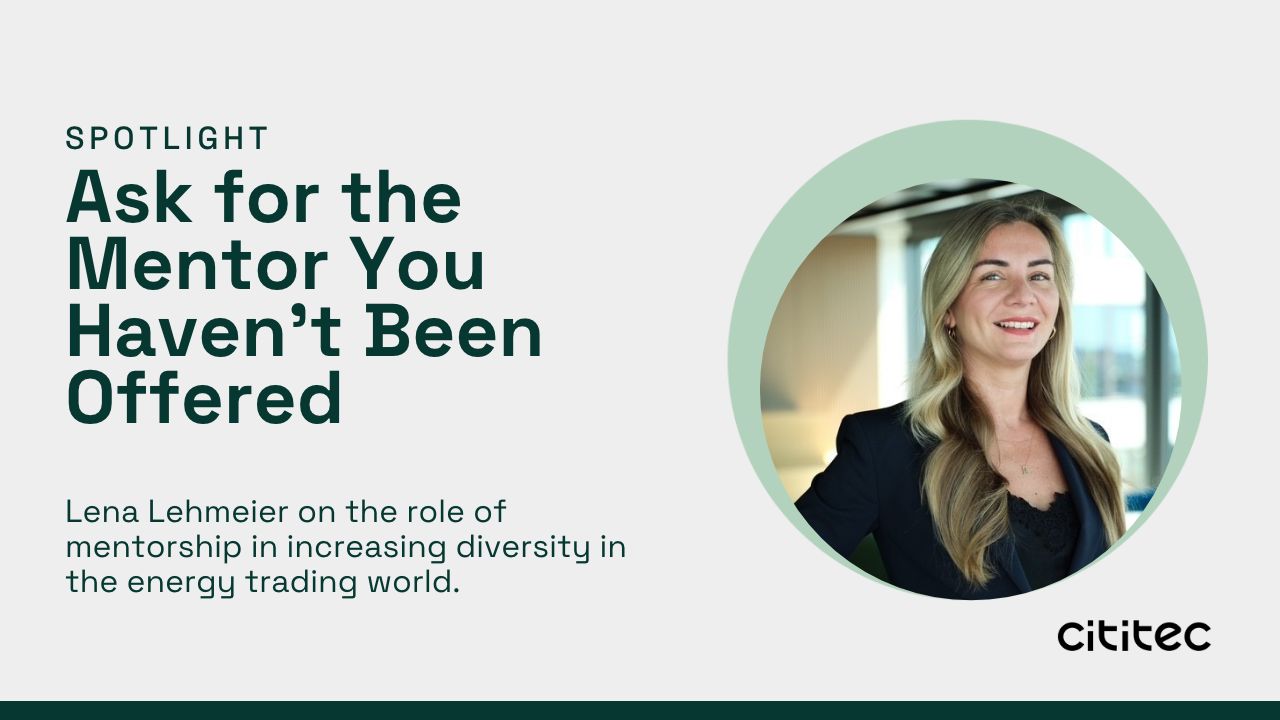
A senior energy professional with sixteen years in the market on access, culture, and what she would tell her younger self. This is a Women in Energy Spotlight.
In renewables origination leadership, Lena Lehmeier can count the women at her level on one hand. At conferences, around 90% of the people in the room are men.
Lena has spent sixteen years in the market. She began on a fuel oil broking desk at one of London’s larger brokers, and has since moved into renewables. That range shapes how she sees the barriers, and she is careful to describe her view as one person’s account, rather than a survey.
In our interview, we identified several hurdles that continue to make the energy trading world a tough sell for women, and how established energy trading companies can work to remove those hurdles.
Access vs. ability: the hurdles
The first barrier, in her telling, comes well before any interview. Young women rarely see energy trading presented as a career; particularly if they don’t come up with a strong STEM background. Many never consider it.
For those who do, the next hurdle is choosing to enter a male-heavy environment and being comfortable there. When she started, Lena said, “you really had to want it”, which meant accepting a more aggressive, dominant style of working. She was clear that she was not describing harassment, and equally clear that things may have changed since.
Then comes hiring. In Lena’s experience, “people like to hire people they feel similar to”, so the door opens unevenly for qualified candidates. How much that matters depends on the firm’s recruitment strategy. She has watched a great deal improve over her career, though she believes the market still has some way to go.
The critical role of mentors
Lena’s start in broking was fostered by two colleagues. One sat next to her on the desk and taught her much of what she needed to know. The other, her desk head, backed her growth. Neither felt threatened by her, and both brought her into important opportunities. With few senior women to learn from, Lena says that without those two people “I would have not been able to be successful in the beginning of my career.”
That experience is why she treats mentorship as a requirement, and why she is wary of leaving it to luck. New hires ought to seek a mentor; and seasoned energy trading companies can improve inclusive promotion simply by offering it.
If nobody offers, ask
Not everyone falls into the mentorship Lena found, so her advice to people entering the market is to be proactive. If nobody offers support, she says, “you just have to ask for it.” Newcomers often hesitate to impose on a senior colleague, but a request to be taken along or taught something is “always very well received”, and in her view “people don’t do that enough.”
She suggests choosing someone you both work well with and like on a personal level. That person doesn’t have to be a woman, and doesn’t have to work at your firm: industry events are another route. “I do extend [mentorship] proactively because I think that’s something I would have wanted when I was that age.”
She calls her peers of all genders to do the same. We agree: be on the lookout for new hires who need your support.
What employers control
Asked what she would change with control of a company’s HR, Lena separated the opportunity into three parts.
The first is hiring. Skills must match the role, and she doesn’t believe in hiring on gender alone, but she thinks firms should look closely at how they recruit and whom they default to.
The second is retention. Keeping talent means an environment where people feel heard, and flexibility wherever the role allows it. She is realistic about the limits: “If you want to be in energy trading, it’s probably difficult to do that part time”, so flexibility is to be considered role by role.
The third sits largely outside any employer: getting more women interested in the fields that lead into energy, whether trading, engineering, or construction. This is a work in investment: your team can attend school career days and invite young people behind the scenes at the office to foster that interest.
What she would tell her younger self
Lena says that earlier in her career she “tried a bit too hard to fit in”, and adopted some of the harder edges of the culture around her. With hindsight, “I should have stayed true to who I am overall”, and she would be more patient about how fast things change. She doesn’t claim it would have been easy: at the time she doubts she had much choice, and some seniority is needed before you can change anything.
Her outlook is measured. There is considerably more to do, she says, but “I can see a glimmer of going in the right direction.”
Lena Lehmeier is the Head of Origination Germany at Return Energy, the leading European independent energy storage provider. She has over 16 years in the energy sector, with extensive knowledge of the renewable power, gas, and oil markets.
Looking for more insights? This conversation is part of our Women in Energy Spotlight. Get exclusive insights from industry leaders, stay up-to-date with the latest news, and explore the cutting-edge tech shaping the sector by subscribing to our newsletter.